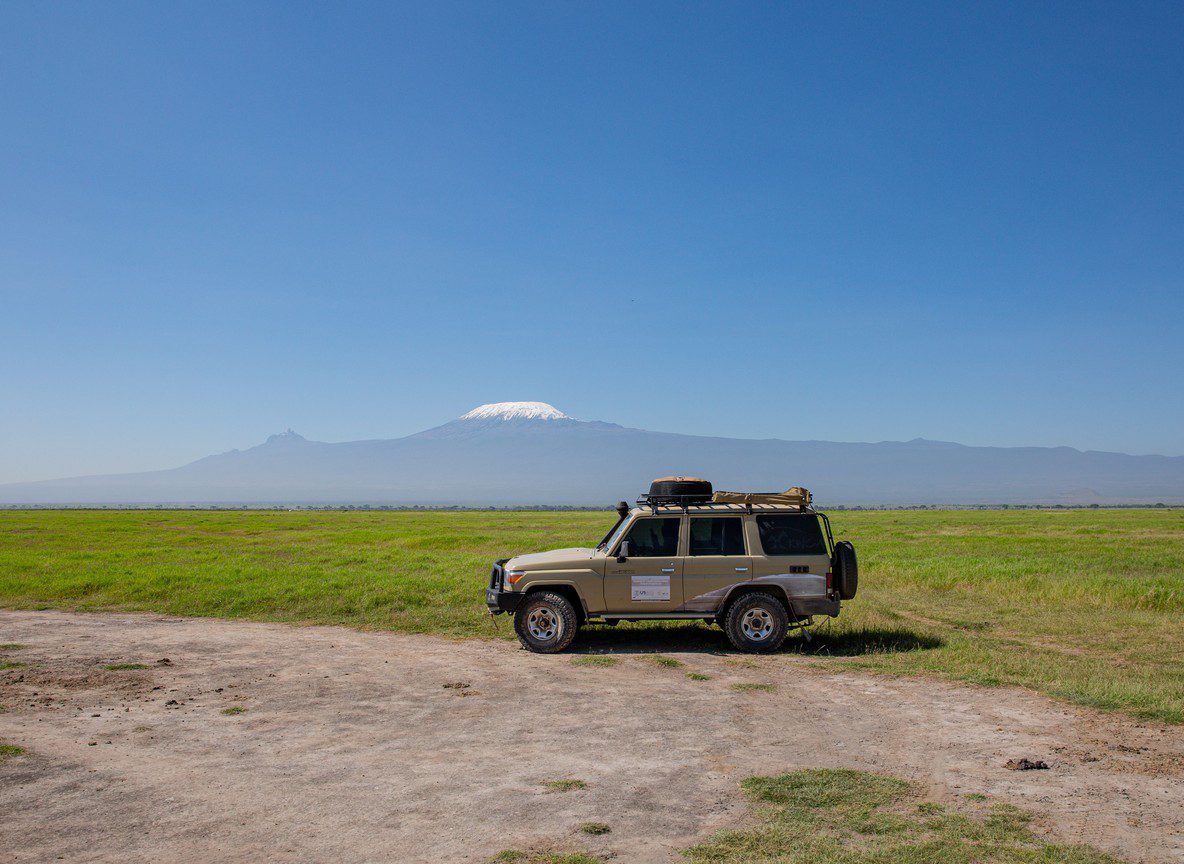
There is a moment in Amboseli that photographers describe the same way, every time. You are sitting in a Land Cruiser at the edge of a swamp, the flat lake bed stretching toward Tanzania, and then Kilimanjaro comes out of the cloud. Not gradually. All at once. A full 5,895 metres of snow-capped volcano, filling the sky above a herd of two hundred elephants moving through the dust.
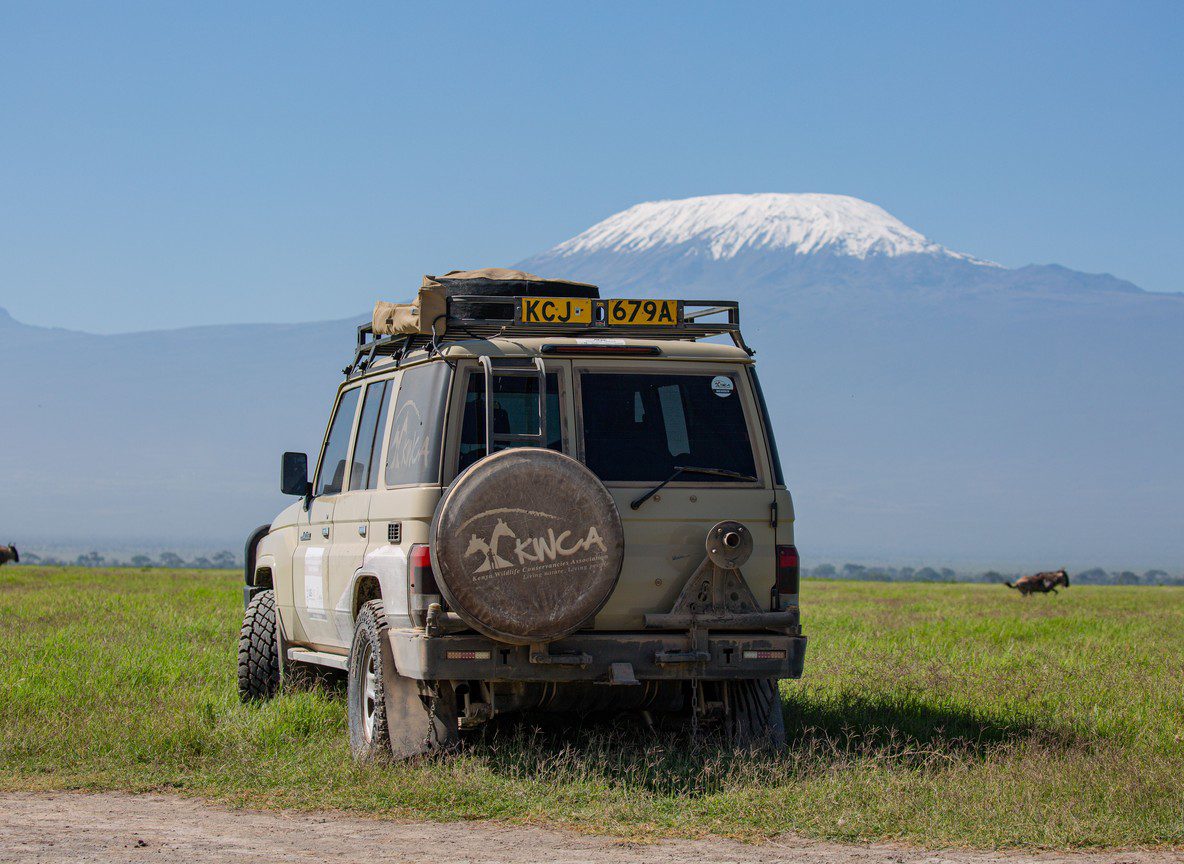
That image has made Amboseli National Park one of the most recognised wildlife destinations in Africa. But in 2026, the real reason to come here runs deeper than a photograph. Amboseli is the place where the scientific understanding of elephant society was built, over decades of fieldwork that changed how the world thinks about animal cognition, family structure, and grief. It is where you can watch a super tusker, one of fewer than 20 such animals left in Kenya, graze in open grassland within range of your camera. It is where well-trained guides can tell you the name, family history, and personality of the bull approaching your vehicle, because the research never stopped.
This is what a wildlife destination looks like when science and conservation run in parallel. Here is everything you need to know about Amboseli national park in 2026.
Why Amboseli Stops You in Your Tracks
Amboseli national park covers 392 square kilometres in southern Kenya, sitting in the shadow of Mount Kilimanjaro on the Tanzanian border. It is one of the smaller parks in Kenya’s national park system, but it punches well above its weight in every category that matters: elephant density, open sightlines, and photographic conditions.
The park’s landscape combines five distinct habitats. Open grassland plains, where the famous dust-cloud elephant images are made, cover most of the park. Swamps fed by underground water from Kilimanjaro’s snowmelt create year-round green feeding grounds. Acacia woodlands, thorn scrub, and alkaline lake beds complete the ecosystem. That variety within a compact area keeps game drives productive. You are rarely more than ten minutes from a different habitat and a different set of wildlife.
The elephant population is the anchor. Amboseli holds approximately 1,600 resident elephants, organised into family units that have been tracked and named since 1972. This is the largest documented and individually identified elephant population on Earth. For wildlife enthusiasts, that means every sighting comes with context. A knowledgeable guide is not pointing at “an elephant.” They are pointing at a specific matriarch, describing her family line, her reproductive history, and the young bulls currently testing their independence on the edges of her group.
The Super Tuskers: Amboseli’s Most Sought-After Sighting
The term “super tusker” describes a bull elephant whose tusks each weigh more than 100 pounds. These animals carry genetic material that was once far more common across Africa before the ivory trade removed most of it from the gene pool. In 2026, Kenya holds an estimated 15 to 20 super tuskers, and Amboseli is where several of the most-photographed ones live and range.
Craig, Tim, and Tolstoy were among the most famous Amboseli super tuskers of the past decade. Their tusks reached the ground. Their body mass was extraordinary even by African elephant standards. Younger bulls in the Amboseli ecosystem are now being watched by researchers and conservationists as potential successors to that genetic legacy.
Spotting a super tusker is not guaranteed on any single game drive, but Amboseli offers better odds than anywhere else in Kenya. The open terrain makes long-distance scanning possible. Research data means guides who know the park well understand the ranging patterns of individual bulls. And unlike forested parks, when a super tusker is in the open at Amboseli, you will see all of it, from ground to shoulder, at useful range.
Photography notes for super tuskers: morning light from the east silhouettes the tusks and requires a lower camera angle. Afternoon light from the west illuminates the tusks directly and is preferred for tusk-length shots. Dry season months reduce heat shimmer, which matters significantly for telephoto work at distance.
The Amboseli Elephant Research Project and What It Means for Visitors
The Amboseli Elephant Research Project, founded by Cynthia Moss in 1972, is now the longest-running elephant study in the world. Identification does not rely on tags or collars: researchers photograph each elephant’s ears, which accumulate a unique pattern of tears, holes, and notches over a lifetime of thorns, rival encounters, and ordinary bush wear, and cross-reference that photographic catalogue, built since 1972, against tusk shape and other scars to confirm identity. It changed what science knows about elephant cognition, family structure, grief, and long-range communication. The project’s data on over 1,600 individually identified elephants forms the foundation for most elephant conservation policy across sub-Saharan Africa.
For visitors, this research history transforms every sighting. The matriarchal families all have names starting with the same letter. The CB family, the EB family, the OA family. Guides trained in Amboseli’s research tradition can describe the family history of a herd in front of you, including the current matriarch’s age, her reproductive history, and which young bulls were recently spotted attempting to associate with other family groups.
In 2026, the Amboseli Elephant Research Trust continues active fieldwork in the park. Their research station is not a public visitor attraction, but their data informs every specialist safari guide working in the ecosystem. For visitors who want to engage at that level, a research-focused game drive approach, structured around the methodology the project uses, produces both better wildlife observation and far better photographs than a standard circuit.
The key approach: downwind positioning when approaching family groups, systematic note-taking on family composition and breeding bull presence, and patience with individuals rather than constant movement between sightings. That is the difference between watching elephants and beginning to understand them.
Amboseli National Park Climate: When to Go
The Amboseli national park climate is governed by two rain seasons, both shorter and more predictable than in other Kenyan parks. Long rains run from March to May. Short rains fall from November into December. The dry seasons, January to February and June to October, are the peak wildlife viewing periods.
Dry season concentrates elephants and other wildlife around the permanent swamps. The absence of grass growth also means clearer sightlines across the open plains. Kilimanjaro visibility, critical for the iconic photographs, is best in the early morning hours from December through February, when overnight cooling clears the mountain’s summit cloud layer. July through September is the most reliably dry period but Kilimanjaro is often cloud-capped by midday.
The months of January and February offer arguably the best balance of Kilimanjaro visibility, dry conditions, and lower visitor density than the July-September peak. Elephant bulls are also more active around female family groups during this window.
| Month | Wildlife | Kilimanjaro Visibility | Visitor Density |
|---|---|---|---|
| Jan-Feb | Excellent | Best (morning) | Medium |
| Mar-May | Good-Fair | Poor | Low |
| Jun-Jul | Excellent | Good | High |
| Aug-Sep | Excellent | Variable | High |
| Oct | Very good | Good | Medium |
| Nov-Dec | Good | Fair | Low-Medium |
For visitors prioritising elephant research access and photography quality together, January-February is the recommended window. For those combining Amboseli with a Masai Mara migration safari, July works well for both destinations.
What Else Lives in the Amboseli Ecosystem
Elephants are the headline, but the Amboseli ecosystem supports a full range of Kenyan savannah wildlife. Lion prides are resident in the park and periodically attempt hunts on the herds, targeting young and old elephants. Cheetah are present across the open plains, using the flat terrain for high-speed chases that are among the most visible in East Africa. Leopard are seen in the acacia woodland zones, particularly where tree density provides useful cover.
Over 600 bird species have been recorded in the ecosystem. Wetland species around the swamps are particularly rich: African fish eagle, African spoonbill, yellow-billed stork, and a wide range of waders. The open grassland holds raptors including bateleur, martial eagle, and secretary bird. For birders, a full day at Amboseli routinely produces 80 to 120 species.
Cape buffalo herds move through the park, frequently mixing with elephant groups at the swamp edges. Giraffe, zebra, wildebeest, and impala fill the grasslands. Hippo are found in the permanent swamps. Black rhino are absent from the park itself but can be added through a Chyulu Hills extension for visitors building a wider southern Kenya programme.
The Kilimanjaro ecosystem also gives Amboseli a cross-border dimension. Some elephant families range between the national park and community conservancies in both Kenya and Tanzania. The conservancies directly outside the park boundary offer private game drives with no vehicle density restrictions, which adds useful flexibility for guests who want a quieter experience alongside the main park.
Kilimanjaro Views: Photographing Africa’s Most Famous Backdrop
Mount Kilimanjaro, 5,895 metres and 45 kilometres from the park, is not always visible. But when it is, and when elephants are in the foreground, the photographs that result are among the most recognisable in African wildlife photography.
The practicalities: Kilimanjaro is typically cloud-free for two to three hours after sunrise. Cloud builds from mid-morning and usually obscures the summit by midday. The best compositions require positioning your vehicle to the south of a herd in early morning, with the mountain rising behind the animals and east-facing light illuminating the scene from the left.
Wide-angle focal lengths (24-35mm full-frame equivalent) capture the mountain’s full scale relative to the elephants but require a closer approach to the herd. Telephoto compression (300-500mm) makes the mountain appear proportionally larger relative to the foreground animals. Both approaches are valid depending on what you are trying to say with the image.
Amboseli’s dust is a feature, not a problem. When elephant herds move, they raise columns of red-orange dust that catch the light in ways that no other park replicates. The swamp edges create reflections during morning drives. The alkaline lake bed, dry for most of the year, throws light upward and eliminates harsh shadows on animal faces. If you understand these conditions before you arrive, you can work with them rather than being caught off-guard.
Planning Your Amboseli Safari in 2026
Amboseli is a three to four hour drive from Nairobi via the Namanga road, or a 45-minute flight from Wilson Airport on scheduled charter services. Most visitors combine Amboseli with one or two other parks in a wider Kenya circuit. The most popular pairings are with the Masai Mara (a 5-7 day combined programme) or with Tsavo West and East for a southern Kenya ecosystem circuit. A Chyulu Hills addition builds in black rhino opportunity and genuine remoteness without significantly extending the overall trip.
Accommodation in and around Amboseli ranges from comfortable mid-range tented camps to luxury lodges with Kilimanjaro-view suites. The key factor for wildlife enthusiasts is location: camps inside or on the immediate boundary of the park allow early morning access before day-visitor vehicles arrive. Properties on adjacent conservancy land offer private game drives with more positioning flexibility.
Observation Hill deserves a specific mention here: it is the only place inside the park where visitors are permitted to leave their vehicle and walk. The short climb gives a panoramic view over the swamps and plains below, and is worth building into an itinerary as a change of pace from the game-drive routine.
Park fees in 2026 are set by Kenya Wildlife Service and are paid per adult per day through eCitizen or KWSPay. Non-resident fees currently stand at USD 90 per adult and USD 45 per child. These are included in most all-inclusive safari packages.
A three-night Amboseli programme is the practical minimum for wildlife enthusiasts wanting real depth. This provides two full game-drive days plus arrival and departure windows with morning drives. Four nights allows a full research-methodology day and still leaves time for general park circuits.
For detailed trip-structure guidance, the Amboseli safari from Nairobi guide covers road vs fly-in access in practical terms, and the Amboseli safari cost guide breaks down budget, mid-range, and luxury price bands with worked examples.
Practical Planning Checklist
- Best months for Kilimanjaro photography: December-February (morning window)
- Best months for wildlife density: June-October, January-February
- Minimum recommended nights: 3 (with 2 full game-drive days)
- Park fee (non-resident adult): USD 90 per day
- Road transfer from Nairobi: 4-5 hours via Emali or Namanga route
- Flight from Wilson Airport: approximately 45 minutes
- Camera recommendation: telephoto of at least 300mm plus a wide option for landscape compositions
Conclusion
Amboseli national park in 2026 is not a commodity safari. The elephant research legacy, the super tusker population, and the Kilimanjaro backdrop combine to make this one of the most genuinely distinctive wildlife experiences available in Kenya. What separates a memorable Amboseli safari from an ordinary one is understanding the depth that is available, and preparing to access it.
The park rewards preparation. Know your seasonal window. Know your photography goals. Understand enough about the research history to recognise what is in front of you when the matriarch turns and looks at your vehicle. That context is freely available for anyone who looks for it before they arrive.
What to Read Next
- Amboseli safari cost guide – full budget breakdown from $150 to $1,500+ per person per day
- Amboseli safari from Nairobi guide – road vs fly-in access, timing, and trip structure
- Amboseli safari packing list – clothing, camera kit, and season-specific essentials
- Amboseli luxury safari guide – premium stay options and what the price difference delivers
Turn this reading into a real itinerary with help from a Kenya-based safari team.
Start Planning Your Safari